

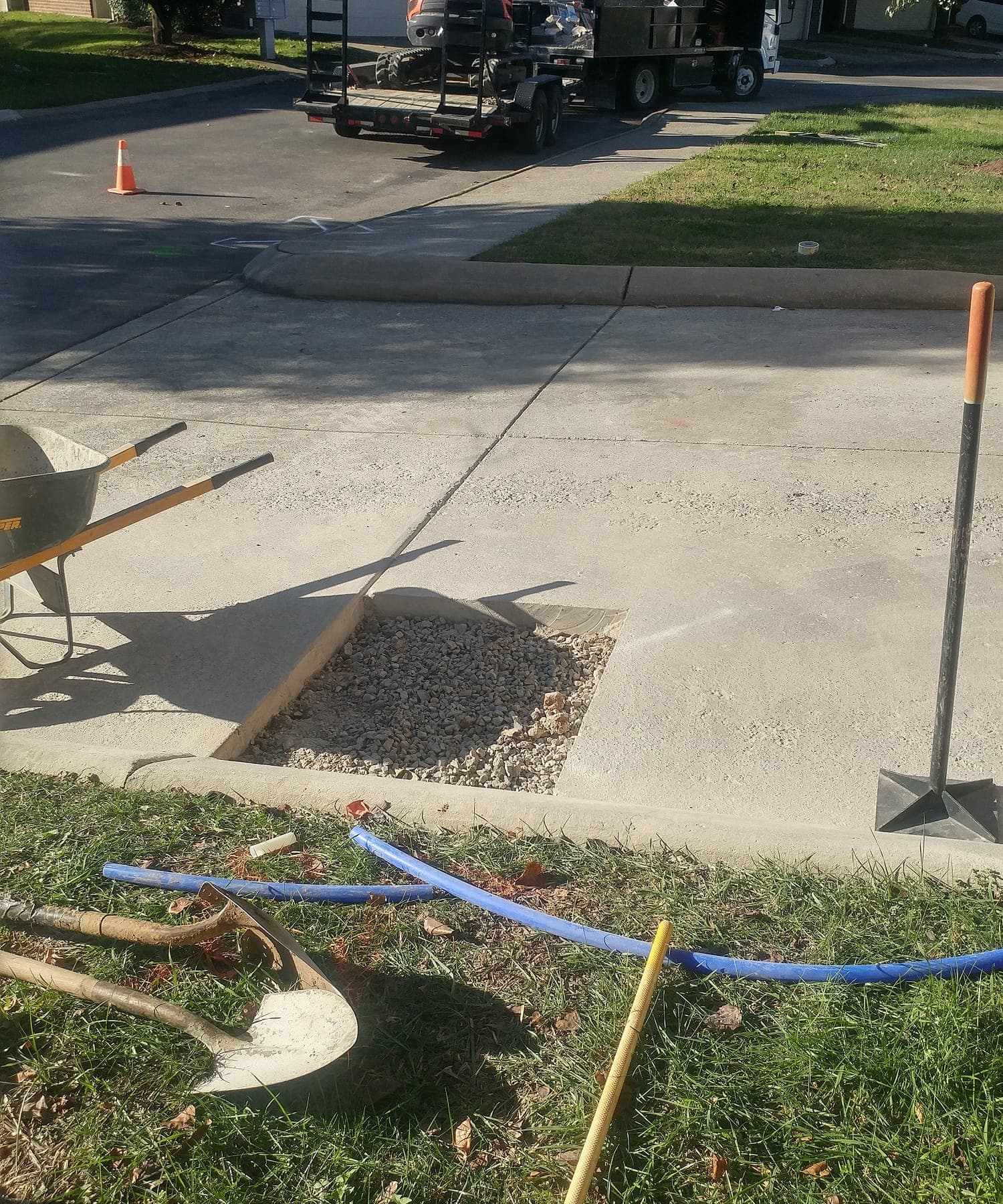
We don't break tile to find your slab leak. We listen to it.
Pressurized water under a slab makes the same high-frequency sound it makes anywhere else. Acoustic listening, thermal imaging, and pressure isolation walk it to a point on the floor. The repair plan follows from what we find.
- Coverage
- Sacramento, Placer, El Dorado, Yolo, Sutter, Yuba, Butte, Nevada, Sierra
A slab leak is loudest in the bill.
Water leaving a pipe under a slab doesn't surface the way a wall leak does. It dissipates into the soil beneath the foundation, sometimes for weeks, before anything visible appears. The first signal is almost always the water bill. By then, hundreds of dollars in water and structural risk are already in motion.
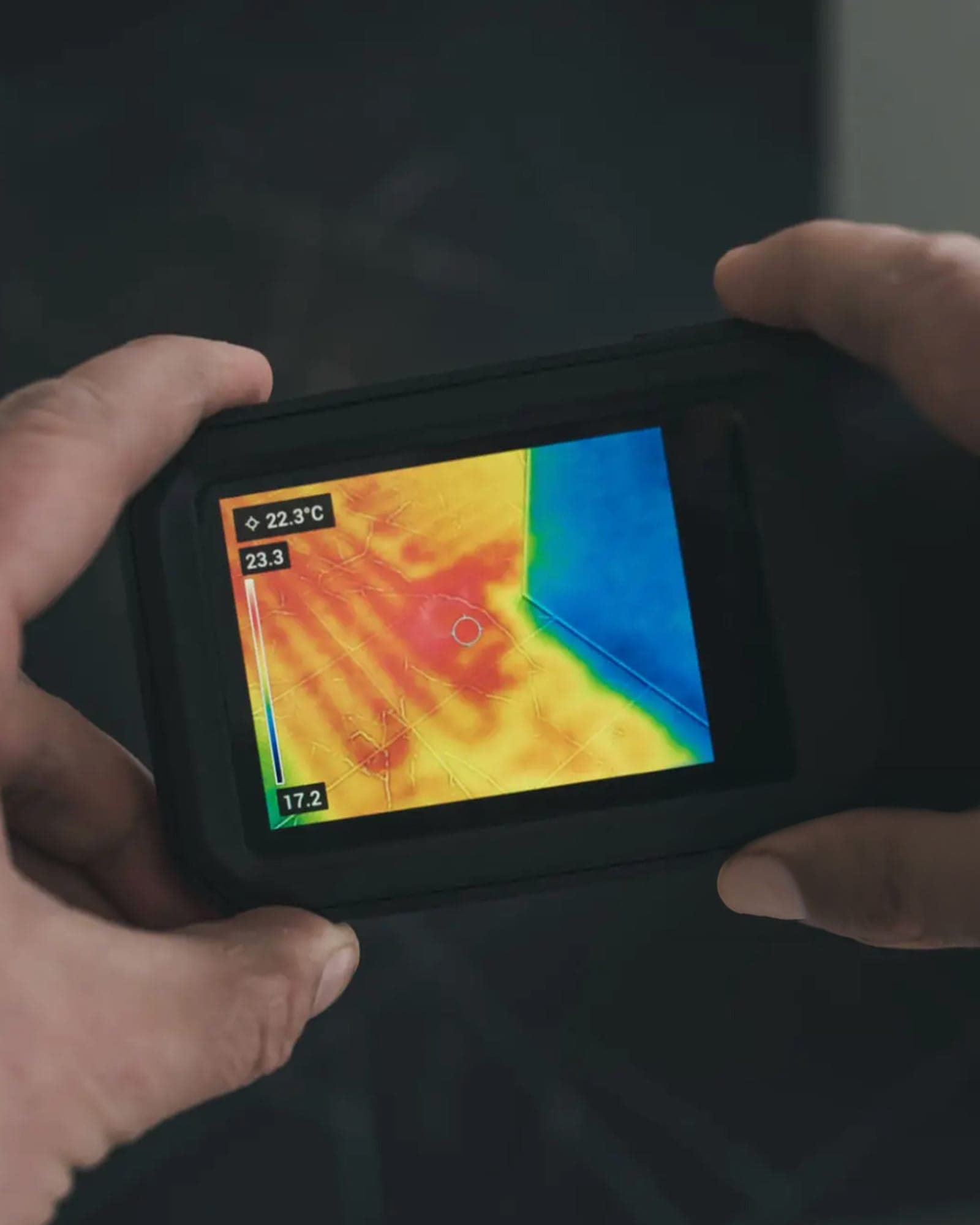
The good news is that the leak is still findable. Pressurized water escaping a plumbing system makes a continuous, high-frequency sound that an acoustic probe can isolate, even through soil and concrete. A hot-water slab leak can surface a temperature signature thermal imaging can read, as the escaping hot water pools beneath the slab.
What to check before you schedule.
These observations help us understand what you are seeing before the visit.
- AWalk every slab floor barefoot or with the back of your hand. A warm patch where the rest of the floor is cool can point toward a hot-water slab leak.
- BListen at a quiet hour for water running with no fixtures open, and note where the sound is strongest.
- CRun a 30-minute meter test with everything off. If the leak indicator keeps moving, the source is pressurized supply, slab or otherwise.
- DCheck the floor-wall joint and grout lines for damp carpet, dark patches that never dry, or efflorescence (the white powdery residue water leaves on concrete).
- EPhotograph any bubbling paint, swelling baseboard, or hairline cracks on the floor. The pattern often follows the pipe run.
Share these details when you call. They help us confirm which test fits the symptoms.
The signatures we work from.
Slab leaks can show up in several different ways. None of these signals proves the location by itself, but each one helps decide whether slab-leak detection is the right next step.
- 01A warm patch on the floor over a hot-water supply line
- 02Audible water running through pipes with no fixtures open
- 03Damp carpet, baseboard, or grout that returns after drying
- 04A meter that moves when the whole house is shut off
- 05An unexplained spike in the water bill with no usage change
- 06Mildew odor that stays localized to one room or zone
- 07Bubbling paint, swelling baseboard, or efflorescence at the floor line
- 08Hairline cracks in the slab or finish that track along the pipe run
When the signature is unclear or the symptoms point at more than one system, we run the broader cause-and-origin diagnostic first (see mystery leaks) before narrowing to slab work.
Hot side or cold side: we settle that before anything else.
We start at the meter to confirm pressurized supply is losing water. From there, the technician listens to the plumbing system, including the valves at hot and cold fixtures, so the line carrying the leak identifies itself.
Acoustic ground microphones then walk the leak down to a point on the slab. Thermal imaging can add a temperature read when escaped hot water has affected the surface. The leak gets marked on the floor, photographed, and noted in the written report.
- Tools on hand
- Acoustic ground mics, thermal cameras, pressure gauges, line tracers
- Visit pricing
- Priced by test type, not by the clock
When to call for slab leak detection.
If a slab-leak signature is on the table, the next step is detection, not a contractor with a saw.
- 01You've felt a warm patch on a floor that should be cool
- 02Your meter is moving with everything shut off
- 03Your water bill rose with no change in usage
- 04You hear water running below floor level with no fixtures open
- 05Carpet, baseboard, or grout keeps coming back damp
- 06Your contractor needs the leak located before they cut concrete
- 07A previous slab repair did not stop what you were seeing
- 08Your insurance carrier needs documented location and source
If the floor is warm or the bill is high, locate the slab leak before the saw.
- Direct
- (916) 331-6443
Mon–Fri · 8a–5p · CA Lic. #393393 · Bonded & insured
Questions we hear most.
Short, plain answers to the questions homeowners and contractors ask before scheduling a slab-leak inspection.
Can you actually find a leak under concrete?
Yes. Pressurized water escaping a pipe under a slab produces a continuous high-frequency sound that travels through several inches of concrete. An acoustic ground microphone amplifies that sound so the technician can locate and mark the leak. Thermal imaging can help when escaped hot water has affected the surface above it.
How do you tell a hot-water leak from a cold-water leak?
The electronic test tells us. During the initial spot check the technician listens to the plumbing system, including the valves at each hot and cold fixture, and the line carrying the leak identifies itself.
What are the repair options once you've found the leak?
Three broad paths. Direct access repair: open the slab at the marked location and fix the pipe. One line bypass: route a single new line overhead so the slab is never opened. Repipe: replace the whole supply system, usually when corrosion or age makes future leaks likely. Each is the right answer for a different leak, and we perform the repair either way. Cosmetic restoration such as flooring, tile, drywall, and paint is handled by your finish contractor.
Do I need a leak detection visit before I call a plumber?
For a slab leak, almost always yes. Anyone asked to find a slab leak from scratch without detection equipment has to make exploratory cuts, and the detection visit costs less than one wrong cut into a finished floor. We locate the leak and perform the repair, so one call covers both.
How long does a slab-leak inspection take?
Most visits run up to 1.5 hours. The test is priced by type, not by the clock, so a faster visit costs the same and gets the same written report.
Will the visit damage my floor?
No. Acoustic and thermal detection are entirely non-invasive. Nothing is cut, drilled, or opened. We mark the location on the surface in a way that wipes off, and we photograph it in the report. Any opening of the slab happens during repair, not detection.
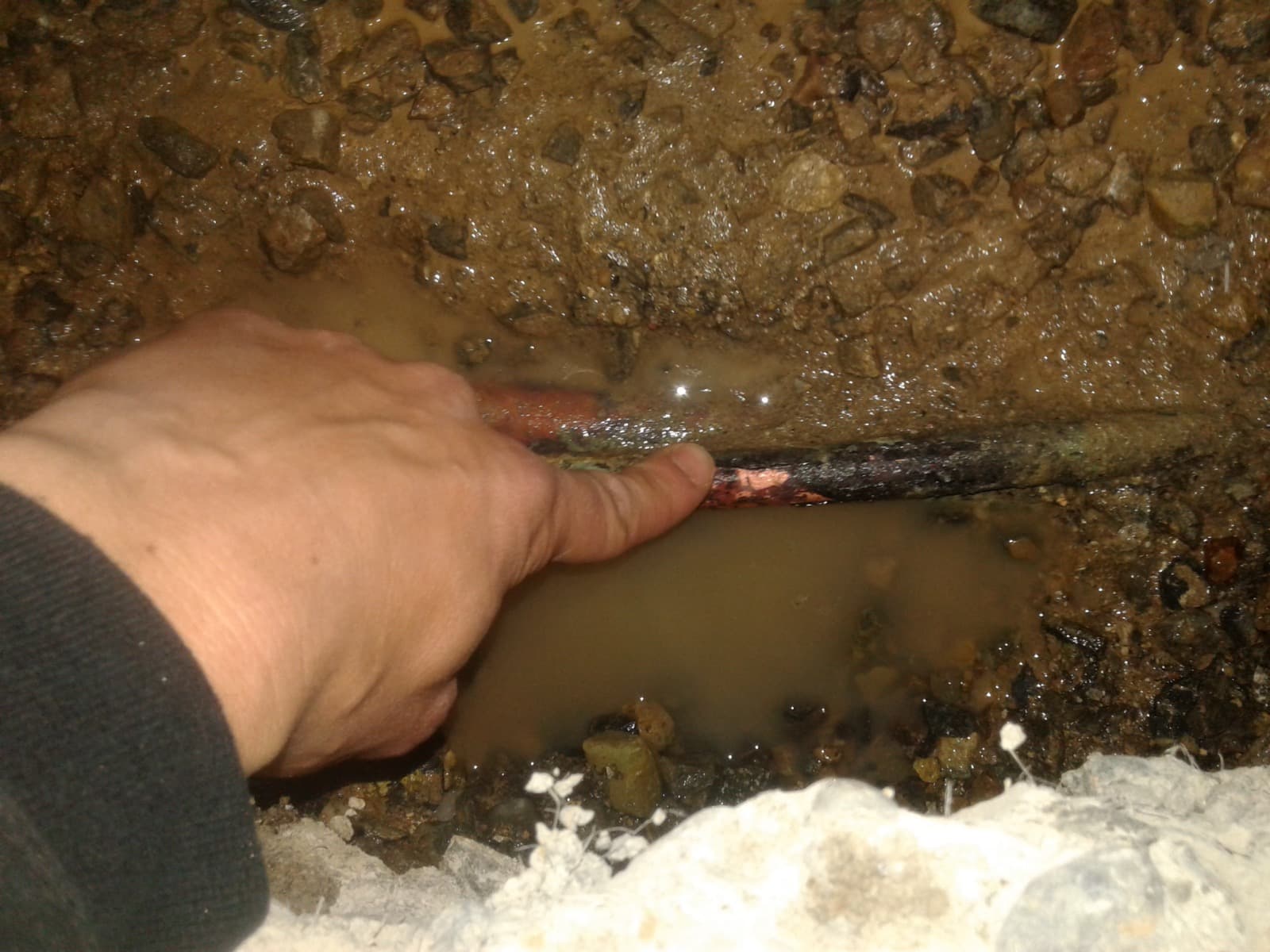
Direct access, one line bypass, or repipe.
Each repair path fits a different situation. The marked location, the affected line, the pipe condition, and the property layout guide whether direct access repair, a one line bypass, or a repipe is the right recommendation.
The tile doesn't move until we know where the leak is.
- Call
- (916) 331-6443
Mon–Fri · 8a–5p · CA Lic. #393393 · Bonded & insured
Once the slab leak is repaired, the floor still has to be put back. Tile, flooring, drywall, and paint are separate trades, and these are the local companies we send our own customers to.
See our trusted referrals