

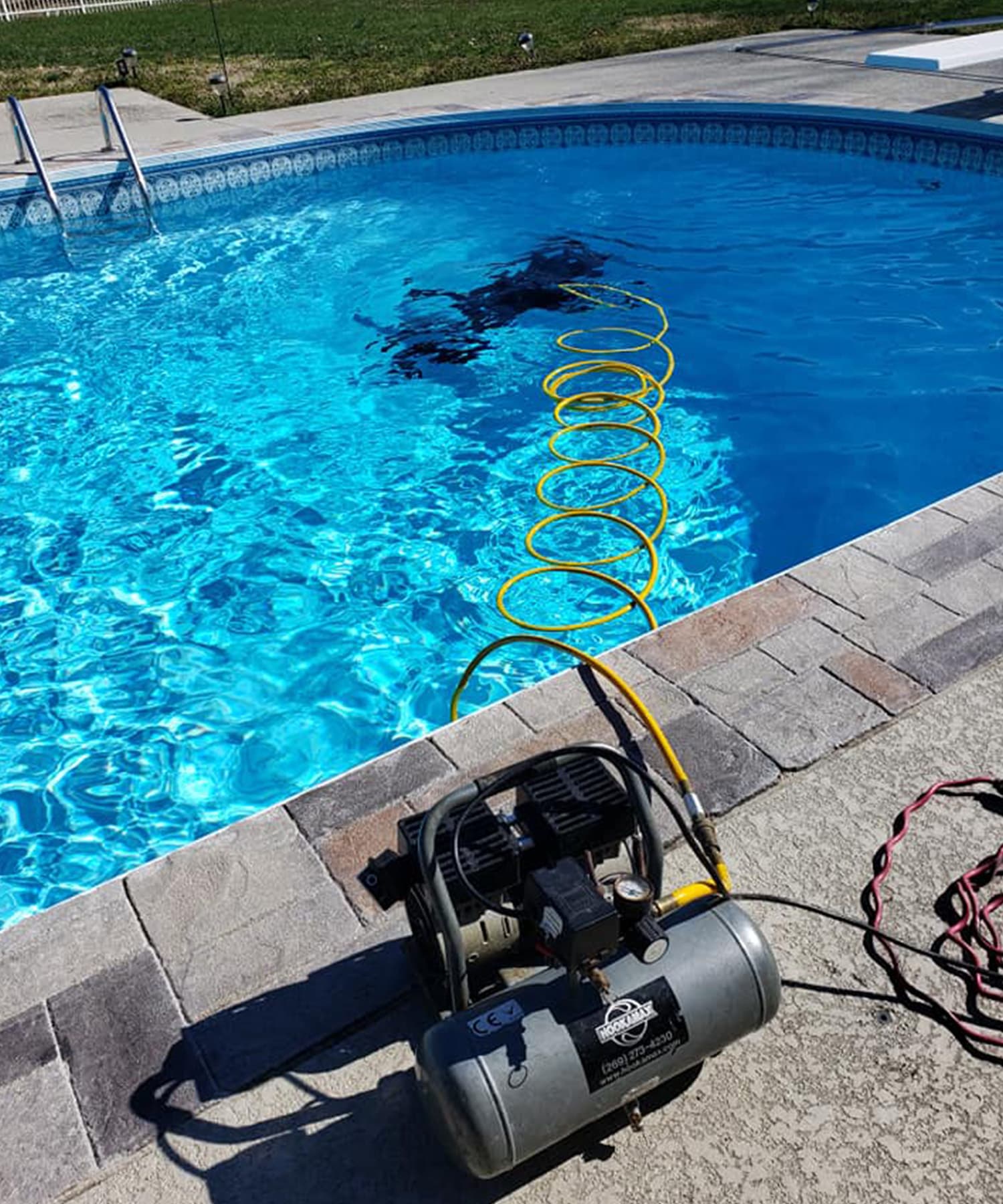
Pools lose water. Leaks lose more.
The first job is separating normal evaporation from an active leak, and a 24-hour bucket test does most of that work before we arrive. Once a leak is confirmed, dye testing and pressure isolation locate it without draining the pool or opening the deck.
- Coverage
- Sacramento, Placer, El Dorado, Yolo, Sutter, Yuba, Butte, Nevada, Sierra
Autofill keeps the water line steady. The loss shows on the bill.
Most modern pools have an autofill valve that tops the level up automatically. The water line stays where it always was, the pool looks normal, and the loss only shows up on the bill at the end of the month. By then a slow plumbing leak has been running for weeks, with the autofill replacing every gallon.
The bucket test cuts through that. A five-gallon bucket on the first step, water level marked inside and outside, pump off, twenty-four hours. Evaporation drops the bucket and the pool by the same amount. A leak drops the pool faster than the bucket, and the gap between them is the loss we need to find.
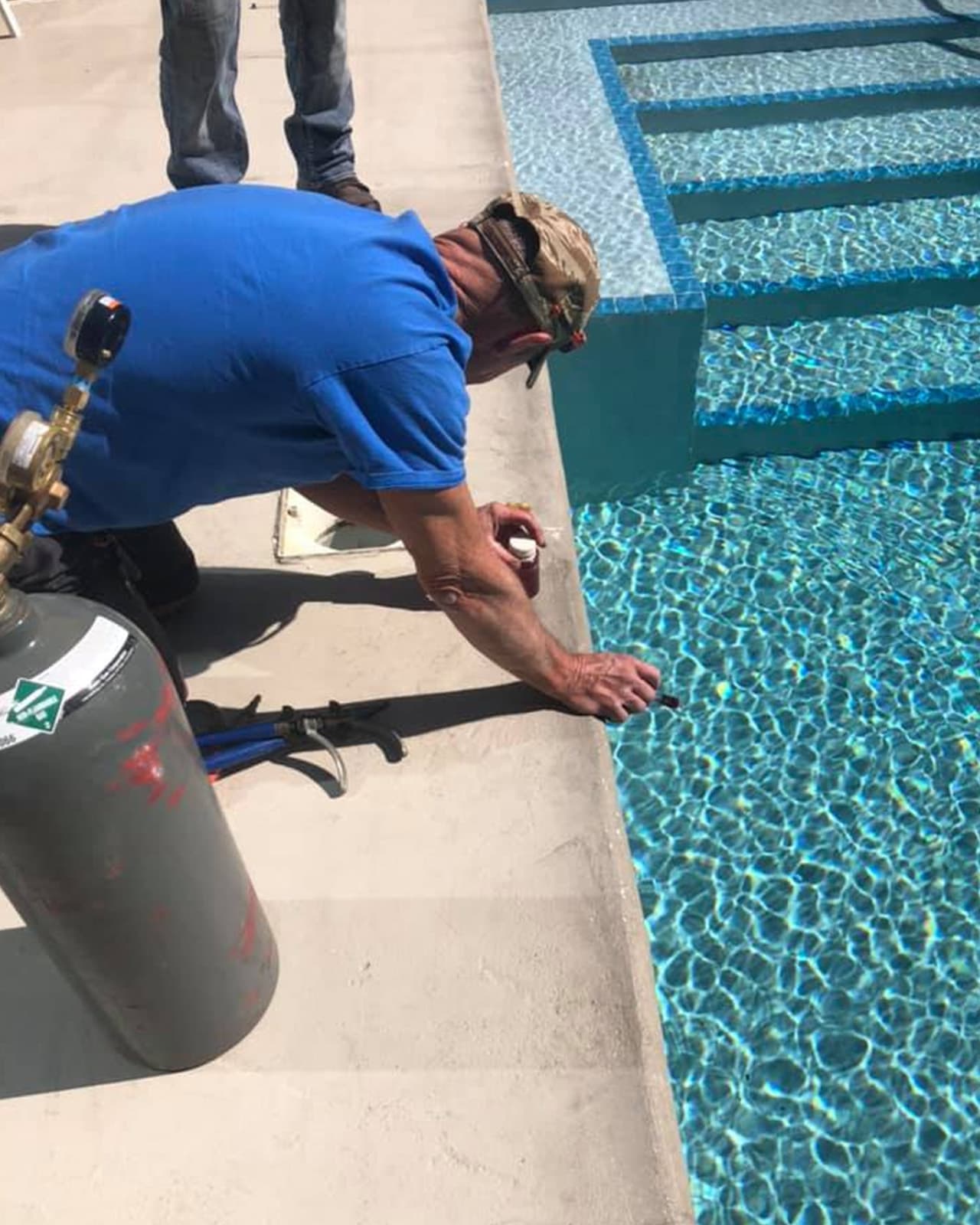
What to run before you schedule.
The bucket test is the diagnostic baseline. The other four observations sharpen it, and sometimes locate the leak before we walk in.
- ARun a 24-hour bucket test with the pump off. Fill a five-gallon bucket 3/4 full, set it on the top step with the rim above water, mark the inside and outside levels, wait. Same loss = evaporation. Pool drops more = leak.
- BNote whether your autofill is cycling more often than it used to. Cycling that doubles or triples is a real signal even if the water line looks normal.
- CWalk the deck for soft spots, settled coping, lifted tile, or unusually lush landscape immediately around the pool. Water follows the path of least resistance and the deck often shows it first.
- DCheck the equipment pad after a run cycle for drips, wet ground around the pump, or staining on the heater housing. Pad-side leaks are the easiest to confirm and the cheapest to repair.
- EListen at the pump for prime loss. A pump that has to be re-primed regularly is usually pulling air from a leak on the suction side.
If the bucket test shows a clear difference between bucket loss and pool loss, you have a leak. The size of the gap tells us roughly how aggressive the diagnostic needs to be.
How pool and spa leak detection works.
A short topic video for pool owners comparing evaporation, autofill behavior, plumbing leaks, and shell leaks before scheduling service.
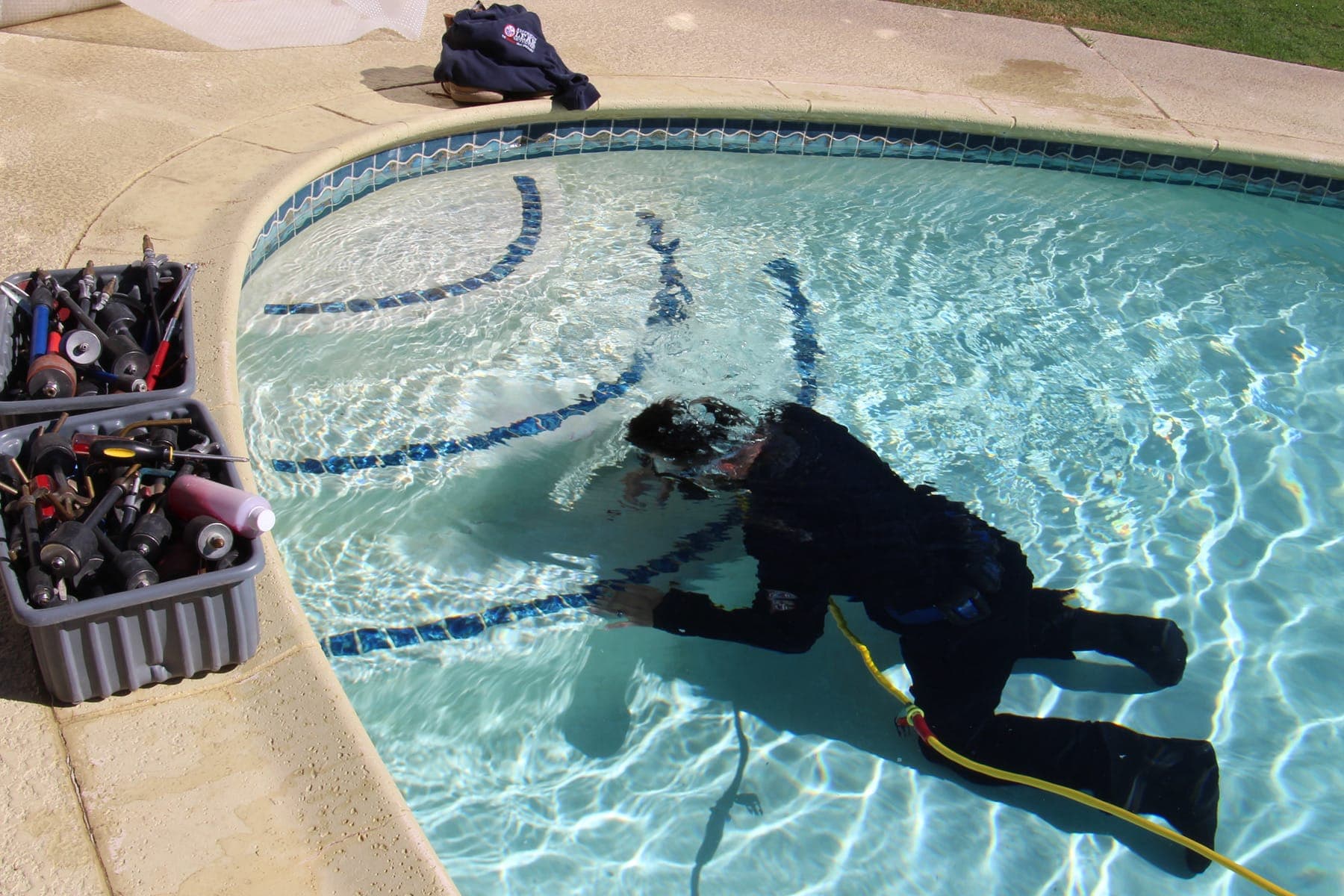
Where pool leaks live.
Pool plumbing and structure fail at predictable points, and decades of inspected leaks help narrow the list before we ever start. The first three on this list account for the majority of residential pool leaks; the others come up more in older construction or after a recent renovation.
- 01Skimmer throat at the joint between the skimmer body and the underground suction line
- 02Light niches, especially conduit-entry leaks in installations before the mid-1990s
- 03Return jet fittings and lateral return plumbing under the deck
- 04Main drain and suction-side plumbing on the bottom of the pool
- 05Shell cracks at the waterline, the bond beam, the steps, or the coving
- 06Tile line and coping joints where the bond beam has settled
- 07Equipment-pad plumbing: pump, filter, heater, automation valves
- 08Autofill valves stuck open (different problem, same symptom on the bill)
Spas and integrated fountains share the same diagnostic (same failure mechanisms, smaller scale). We inspect them as part of the visit when they're plumbed to the same equipment.
Where the water is going, and how fast.
We start by reviewing your bucket test result. That establishes whether the loss is leak or evaporation and roughly how big the loss is. From there, visual inspection of the skimmer, returns, lights, and shell at the waterline identifies the obvious candidates. Dye testing at each suspected point confirms by showing the test dye drawn into the leak instead of dispersing on the surface.
For underground plumbing, the pump is shut down and each line is pressure-isolated from the equipment pad. A pressure drop on a specific line localizes the leak to that run. Acoustic listening then walks the leak down to a point along the run. Pressurized water leaving a buried pipe makes the same continuous high-frequency signature it makes everywhere else.
The leak gets marked at the surface or noted by its position relative to the equipment pad, photographed, and detailed in the written report. Because we also perform many pool leak repairs, the repair can usually start from the same finding without opening the whole deck.
- Tools on hand
- Test dye, pressure gauges, line plugs, acoustic listening, ultrasonic, equipment-pad diagnostics
- Visit pricing
- Priced by test type, not by the clock
When to call for pool leak detection.
If any of these are on the table, a bucket test plus a detection visit costs far less than the next month of the same loss.
- 01A bucket test showed loss beyond a quarter inch per day
- 02The autofill is cycling more frequently than it used to
- 03Your water bill spiked with no indoor or irrigation cause
- 04The pool pump is losing prime regularly
- 05You see wet patches, settled coping, or lifted tile near the pool
- 06There's a visible crack on the shell, deck, or coping
- 07A recent re-plaster or renovation is followed by new water loss
- 08An attached spa, integrated fountain, or water feature is losing water faster than the pool
If the pool is dropping, locate the leak before you drain it.
- Direct
- (916) 331-6443
Mon–Fri · 8a–5p · CA Lic. #393393 · Bonded & insured
Questions we hear most.
Short, plain answers to the questions pool owners and pool companies ask before scheduling a leak inspection.
How does the bucket test actually work?
Fill a five-gallon bucket 3/4 full with pool water. Set it on the top step so the rim is above the pool's water line. Mark the water level inside the bucket and outside on the pool wall. Turn the pump off. Wait 24 hours. Evaporation removes water from the bucket and the pool at the same rate, so equal loss means no leak. If the pool drops more than the bucket, the gap is your leak rate.
How much evaporation is normal in Sacramento?
ALD's published threshold is loss greater than a quarter inch per day. Anything above that warrants investigation. In Sacramento summer, a quarter inch per day is roughly normal evaporation for an uncovered pool in full sun. In winter, normal evaporation drops to closer to an eighth of an inch per day. The bucket test removes the guesswork because it controls for whatever the local conditions actually are that week.
Can you find a pool leak without draining the pool?
Almost always, yes. The pool stays full for the entire detection visit. Dye testing happens at the leak point with the water in place; pressure testing isolates the underground plumbing from the equipment pad without disturbing the pool body; acoustic listening reads the leak through soil and concrete. Draining only becomes relevant if the leak is in the shell below the waterline and a wet repair isn't possible.
What if the leak is in the underground plumbing?
Underground plumbing leaks are some of the most common, and the diagnostic handles them. Pressure isolation localizes the leak to a specific line (the skimmer line, a return, the main drain) and acoustic listening walks the leak to a position above ground. Repair is typically a small opening of the deck rather than removing the whole apron.
Will you have to break up the deck or shell?
No. Detection is entirely non-invasive. Nothing is cut, drilled, or opened during the visit. Any opening of the deck or shell happens later during repair, and the marked location from our visit means that opening is one small hole, not exploratory work.
What about light niches?
Light niches are common leak sources, especially on installations before the mid-1990s, where the conduit entry into the niche tends to fail over time. Dye testing at the niche edge and the conduit entry confirms the leak; repair is typically a niche seal or a conduit reseat rather than full re-plumbing.
Do you inspect spas and fountains too?
Yes. In-ground plaster spas, attached spas plumbed to the pool's equipment, integrated fountains, and water features share the same diagnostic (same failure modes, smaller scale). We inspect everything on the same equipment pad as part of the visit.
How long does a pool leak inspection take?
Most pool visits run up to 1.5 hours. Pool and spa combo tests can run up to 2 hours. The test is priced by type, not by the clock, so a faster visit costs the same and gets the same written report.
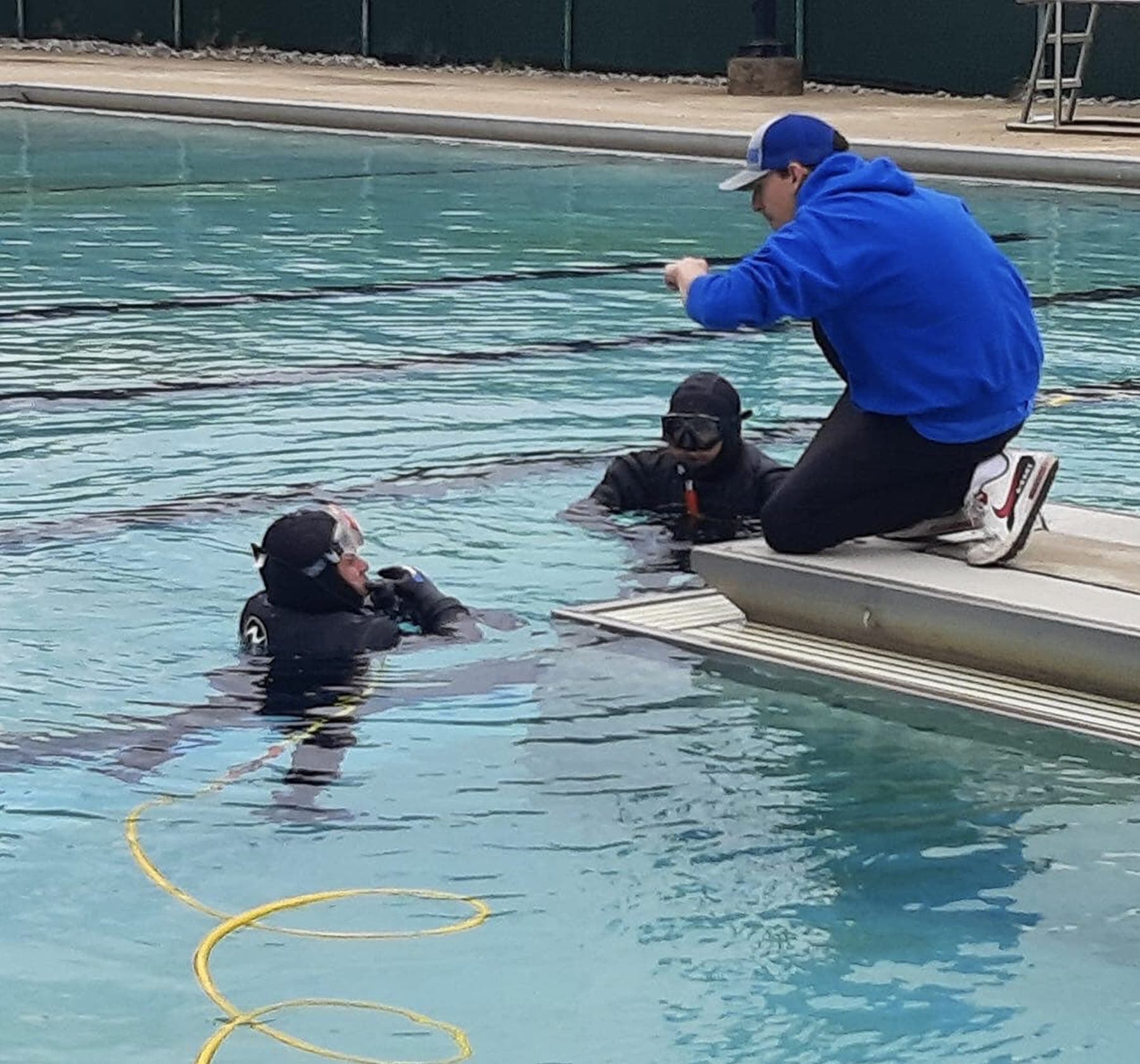
A pool leak costs more than the water.
The water bill is the easiest part to see. Chemicals and heating run alongside it; replacing treated, heated water costs more than the water itself. Saturated soil under or beside the pool moves over time, which is how a slow plumbing leak becomes settled coping, lifted tile, and eventually a structural issue. Find the leak before the next billing cycle.
Bucket test first. Then us.
- Call
- (916) 331-6443
Mon–Fri · 8a–5p · CA Lic. #393393 · Bonded & insured
After the leak is repaired, a pool may still need plaster, tile, coping, or deck work. These are the pool service and resurfacing companies we recommend by name.
See our trusted referrals