

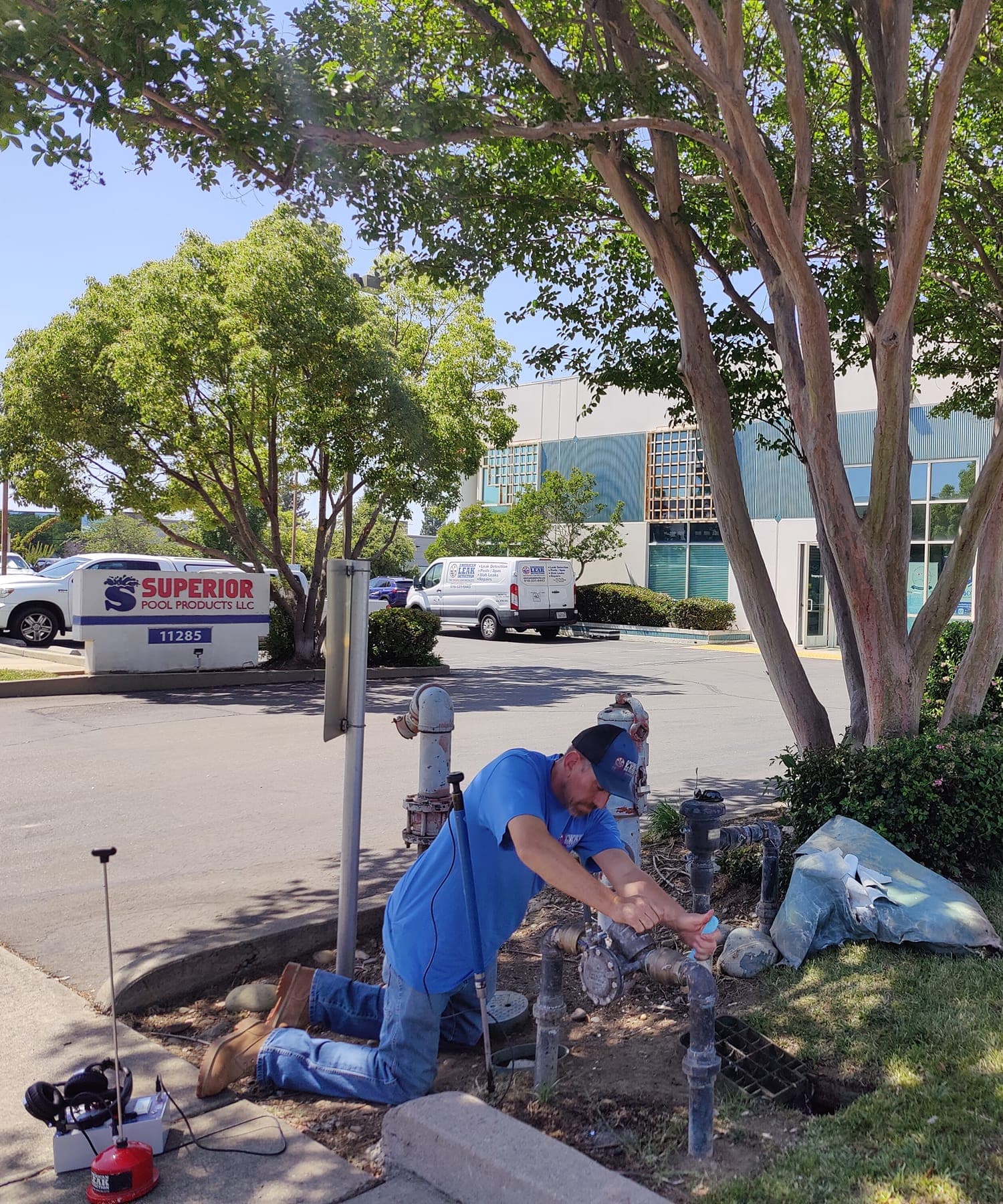
Water-loss detection at the system scale.
Mapped service-line surveys, acoustic correlation on transmission and distribution mains, water-loss audits supporting non-revenue accounting and conservation reporting, and field coordination across operations, capital planning, and regulatory teams. The diagnostic gets bigger; the methodology stays the same.
- Coverage
- Sacramento, Placer, El Dorado, Yolo, Sutter, Yuba, Butte, Nevada, Sierra
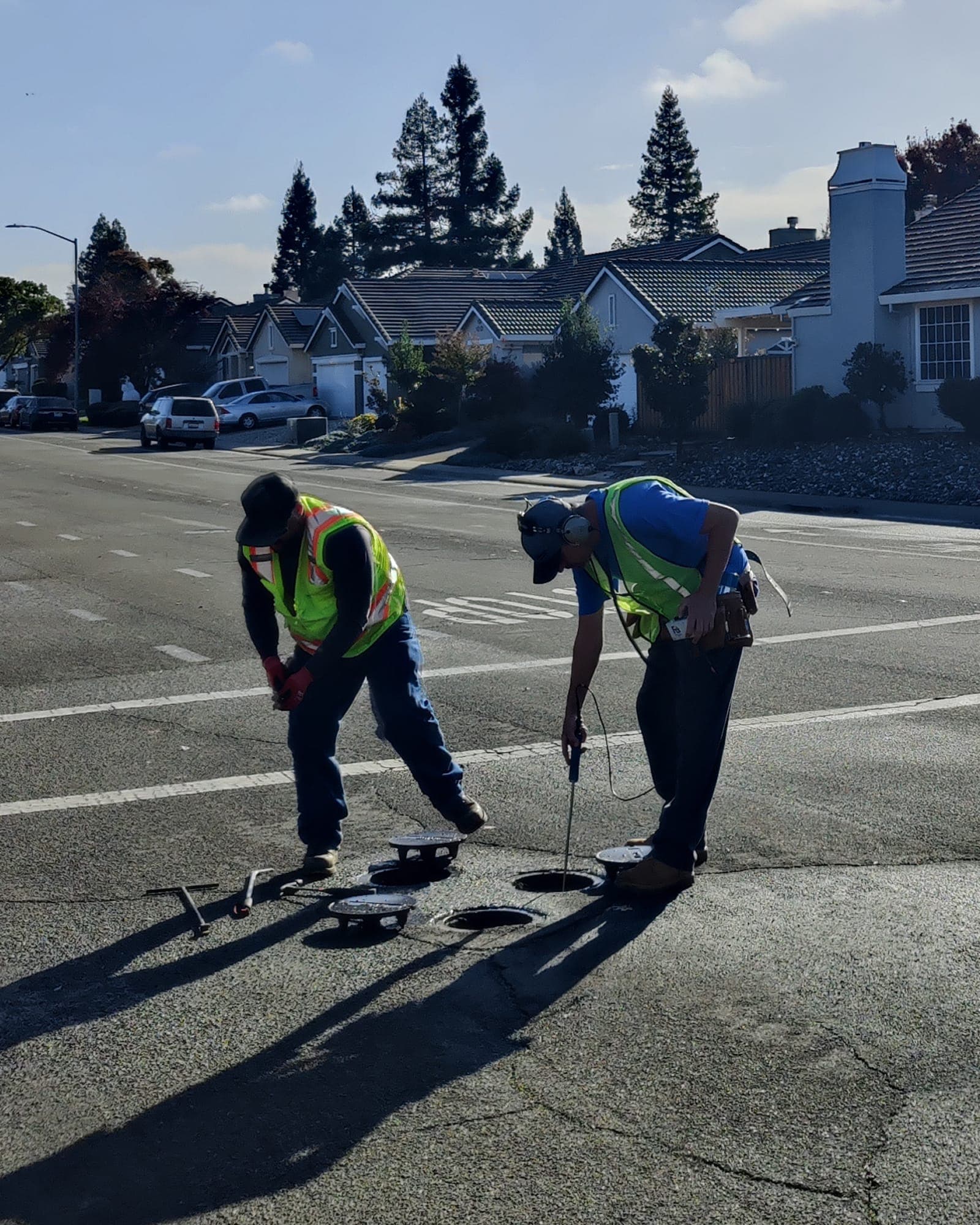
What to confirm before a system-scale survey.
A short checklist to focus the survey scope and surface coordination needs before crews are in the field.
- APull your most recent water-loss audit. The figures from your annual reporting (typically against AWWA M36 methodology) identify the priority work surface before we start.
- BIdentify the priority survey area: a specific district metered area showing elevated loss, a pressure zone with known issues, a route flagged by frequent breaks, or a specific lateral or transmission run.
- CCompile pipeline material, age, and historical break data for the survey area. Asbestos cement, cast iron, and early PVC all fail differently, so knowing the materials sharpens the diagnostic.
- DLocate accessible appurtenances along the survey route (hydrants, isolation valves, air relief valves, blowoffs, meter pits). Sensor placement uses these access points; mapping them in advance shortens the field work.
- ECoordinate the survey window with operations. Acoustic logging is most effective during quiet hours; some segments are easier to survey during planned partial shutdowns or low-demand periods.
For districts beginning a leak-detection program rather than continuing one, a scoping conversation before the first survey establishes which questions the work needs to answer and which deliverables support your regulatory and capital workflows.
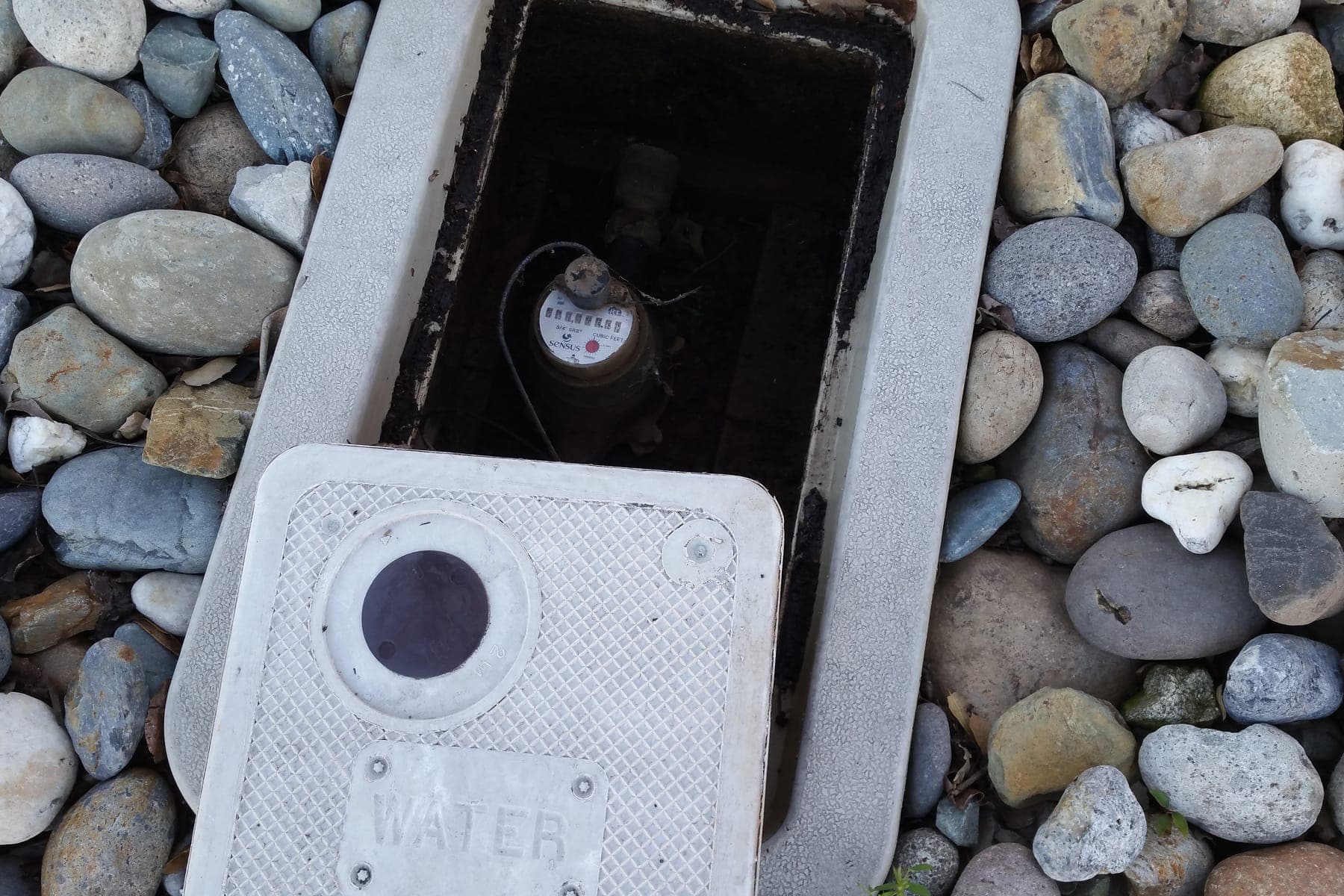
Common district-level engagements.
Most of what we do at the district scale falls into a recognizable set of work surfaces. Each uses the same underlying acoustic, pressure, and flow toolkit, applied to the question the district needs answered.
- 01Annual or biennial system-wide leak survey
- 02Targeted survey on a specific DMA showing elevated unaccounted-for loss
- 03Pre-replacement survey on transmission mains ahead of a capital project
- 04Hydrant-to-hydrant acoustic correlation on a known problematic route
- 05Service-line mapping for a new subdivision, annexation, or boundary adjustment
- 06Customer-side leak survey supporting a district leak-detection or rebate program
- 07Field validation supporting state conservation reporting requirements
- 08Cross-jurisdiction coordination on shared infrastructure or interties
Customer-side work routes through the residential and commercial engagement models on the rest of this catalog; district-side work is what this page is about.
Two signals: where the leak is, and how much it's costing.
Acoustic correlation is the workhorse for distribution mains. Paired sensors are placed at two appurtenances bracketing a pipe segment; both record the sound of any water escaping under pressure. The time difference between when the sound reaches each sensor, combined with the known pipe material, diameter, and length, calculates the leak position to within feet over hundreds of feet of buried pipe.
For lower-signal leaks that don't correlate well during operating hours, acoustic loggers are deployed overnight at hydrants and valve pits. The loggers record continuously during the quiet hours when system noise is at its lowest, then the data is reviewed for the leak signatures the correlator missed.
Flow monitoring closes the loop. Inflow data into each DMA is reconciled against billed consumption to flag districts with disproportionate unaccounted loss. The combination of where (acoustic) and how much (flow) gives the district a defensible basis for capital prioritization, regulatory reporting, and rate-case justification.
- Survey toolkit
- Acoustic correlators, deployable loggers, pressure gauges, flow loggers, GIS mapping, hydrant and valve appurtenance access
- Typical engagement
- Phased by DMA or route, mapped GIS deliverables plus written summary
When to start a system-scale engagement.
If any of these describe the current state of your distribution system, the engagement model on this page is the right fit.
- 01Non-revenue water exceeds your district's target threshold
- 02A specific DMA shows higher-than-expected unaccounted-for loss
- 03A capital project requires pre-replacement leak documentation
- 04State conservation reporting requires field-validated data
- 05A historically problematic route warrants a focused survey
- 06Annexation or subdivision approval requires service-line mapping
- 07A recent main break suggests broader system stress along that route
- 08A neighboring agency's failure has prompted a precautionary survey

If the district is losing water, locate it before it becomes a capital project.
- Direct
- (916) 331-6443
Mon–Fri · 8a–5p · CA Lic. #393393 · Bonded & insured
Questions districts ask.
Short, plain answers to what comes up when water districts and municipalities evaluate a leak-detection engagement at the system scale.
What is non-revenue water and why does it matter?
Non-revenue water is water that enters the distribution system but is never billed to a customer, usually because it leaked, was unmetered, or was used for operational purposes like main flushing. Industry estimates put non-revenue water at 20 to 30 percent of total system input on many utilities. Every gallon was treated and pumped, so the loss costs operational dollars before it shows up in rate analysis.
How does acoustic correlation work over long pipeline runs?
Two synchronized sensors are placed at appurtenances bracketing the segment of interest (hydrants, valves, or air relief pits). Both record the sound of any leak in the segment. The difference in arrival time, combined with the pipe's known acoustic velocity, calculates the leak position to within feet over hundreds of feet of pipe. The technique is non-destructive and doesn't require shutting the segment down.
Can you survey distribution mains that aren't easily accessible?
Most of them, yes. Acoustic loggers can be deployed at any appurtenance (hydrants, valve pits, ARV pits) and bridge the gaps where direct access is limited. For buried segments without nearby appurtenances, line-tracing equipment establishes the route from the surface before the acoustic work begins.
Do your deliverables support AWWA M36 reporting?
Yes. Survey output is provided in formats compatible with AWWA M36 water-loss audit methodology and your existing GIS systems. The deliverable includes confirmed leak locations, suspected areas warranting follow-up, and the source data that supports the loss numbers in the formal audit.
Do you coordinate with operations during the survey?
Yes. Pre-survey coordination establishes which segments are accessible during normal operations, which need partial shutdowns for pressure testing, which routes are best surveyed overnight, and what notification cadence your operations team needs. The survey runs against your operating schedule, not the other way around.
Can you support a capital-planning case before a main replacement?
Routinely. Pre-replacement surveys quantify how much loss the main in question is contributing, which strengthens the capital justification with measured field data rather than estimates. The survey result is part of the deliverable and supports the board, council, or rate-case presentation that follows.
What about customer-side leak surveys for our rebate program?
Customer-side work (locating leaks on the customer side of the meter) is a different engagement that uses our residential and commercial diagnostic toolkit but routes the cost through your conservation program. The district-side and customer-side workflows can coordinate on the same property when the situation calls for it.
How is system-scale work priced?
By the engagement, scoped against the survey area, accessible appurtenances, and the deliverables your reporting workflow requires. Multi-year survey programs are scoped at the program level rather than per-survey; one-time work is scoped per route or per DMA.
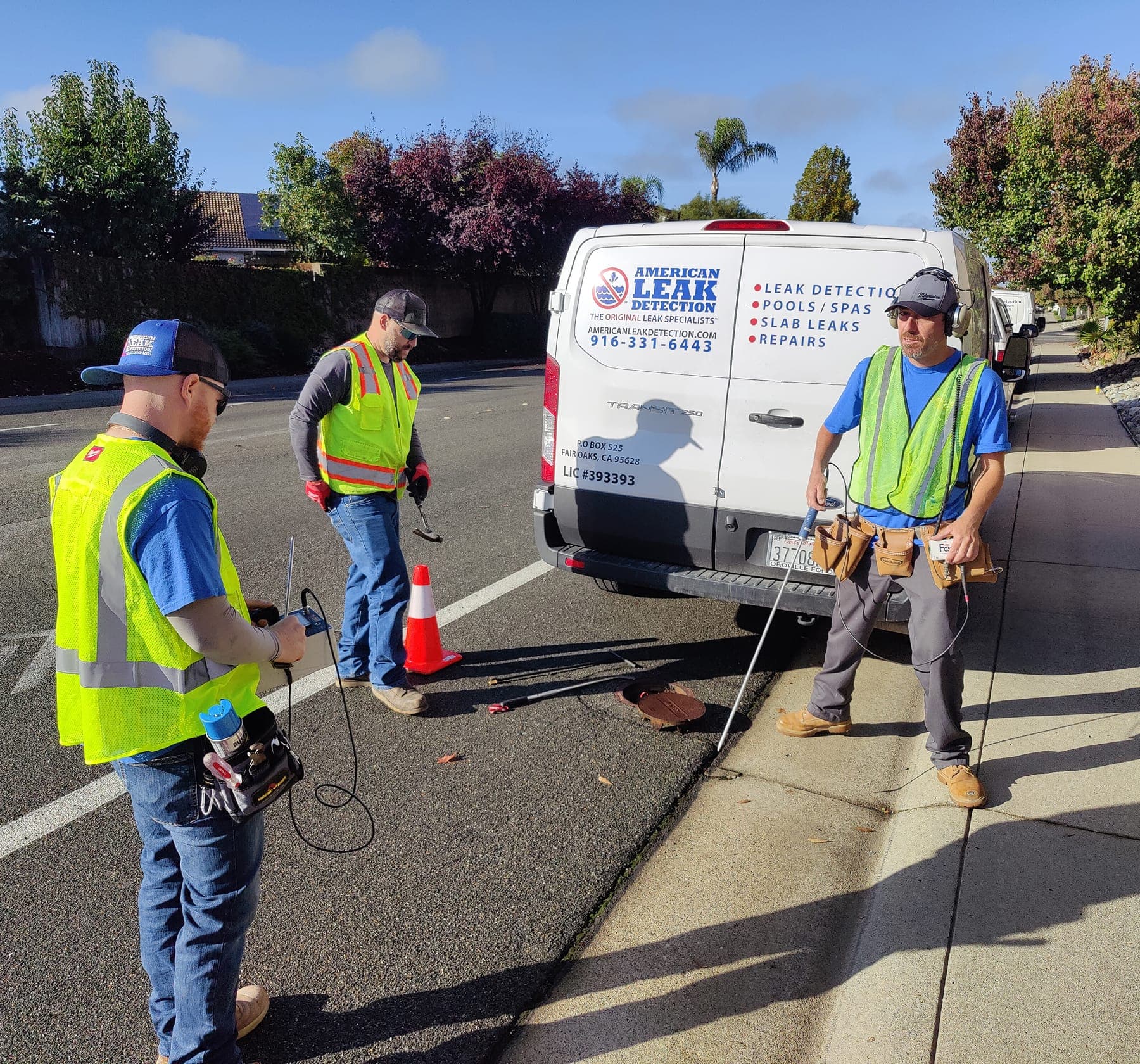
Non-revenue water is paid for twice.
Every gallon a distribution system loses was treated, pumped, and then lost, meaning the district pays the operational cost before the rate analysis ever sees the loss. System-scale detection turns that recurring cost into measured field data your capital, regulatory, and rate-case workflows can act on. The unit economics are favorable far before the program pays for itself in recovered loss alone.
Survey the system before the loss shows up in the rate case.
- Call
- (916) 331-6443
Mon–Fri · 8a–5p · CA Lic. #393393 · Bonded & insured · Multi-year survey programs available