

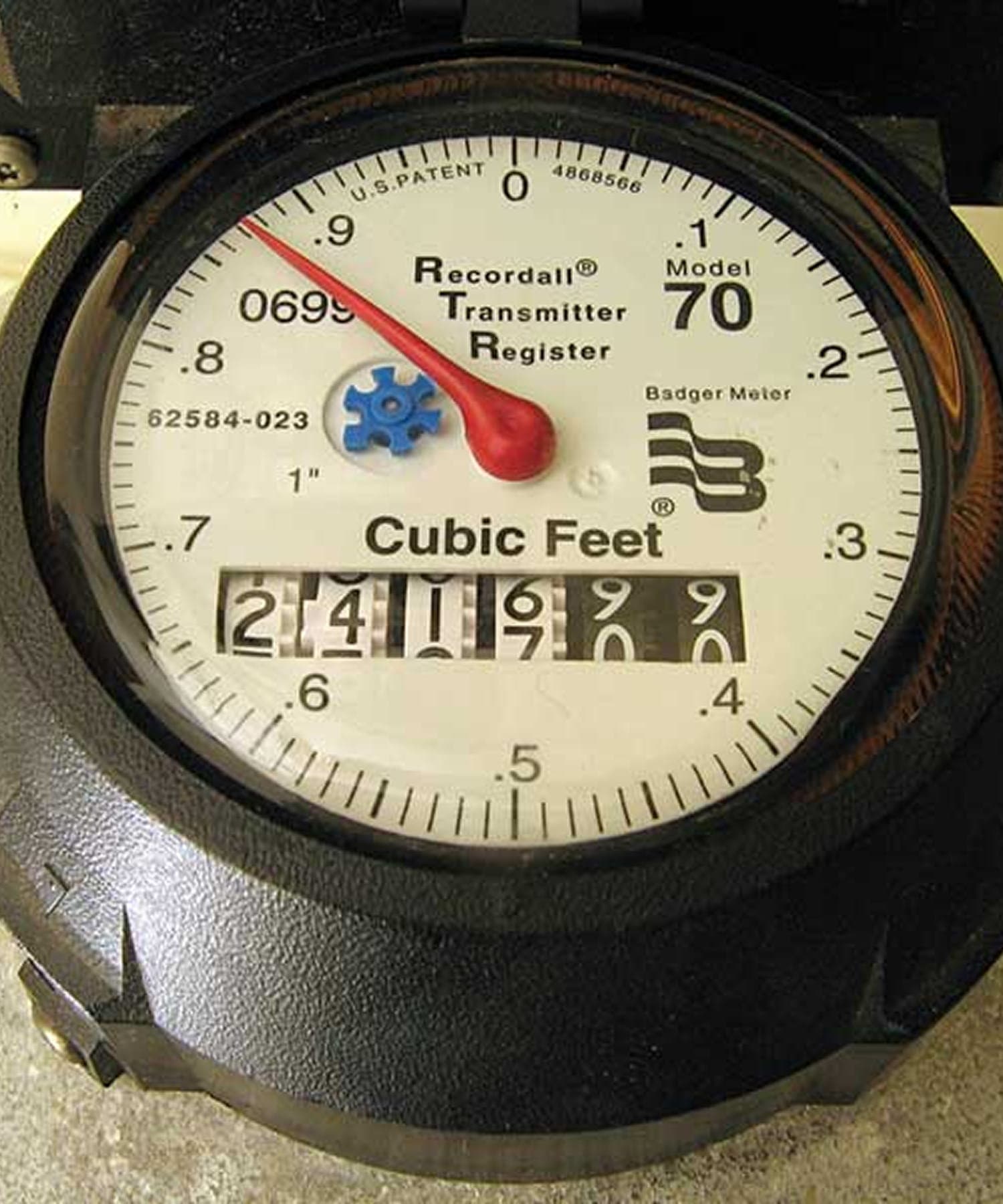
Run a meter test before you call us.
It's the single most useful self-diagnostic for any pressurized water leak. The procedure takes 30 minutes and often confirms whether the problem is supply-side or somewhere else entirely. Here's how, why, and what the result means.
- Time required
- 30 minutes · no water use during the test
What the test confirms, and what it can't.
The meter test confirms that pressurized supply water is leaving the property when nothing on the property is using water. It detects any continuously running leak on the supply side: a slab leak, a hidden leak behind a wall, a buried service-line leak, a slow toilet. If the meter moves with the building shut off, water is going somewhere it shouldn't, and the magnitude of the movement tells you roughly how big the loss is.
The test can't catch every kind of leak. Irrigation leaks only flow when the system is on, so the no-use test reads zero. Sewer-side leaks don't move the meter because the meter measures only inflow, not outflow. Pool plumbing on its own autofill loop sometimes sits behind a valve the meter can't see. Envelope intrusion (water entering the building from rain or saturated soil) has no plumbing signal at all. A still meter does not rule out a leak; it just rules out a continuously running pressurized one.
How to run a meter test in 30 minutes.
Five steps. Anyone can run it. The only required tool is the ability to read your meter.
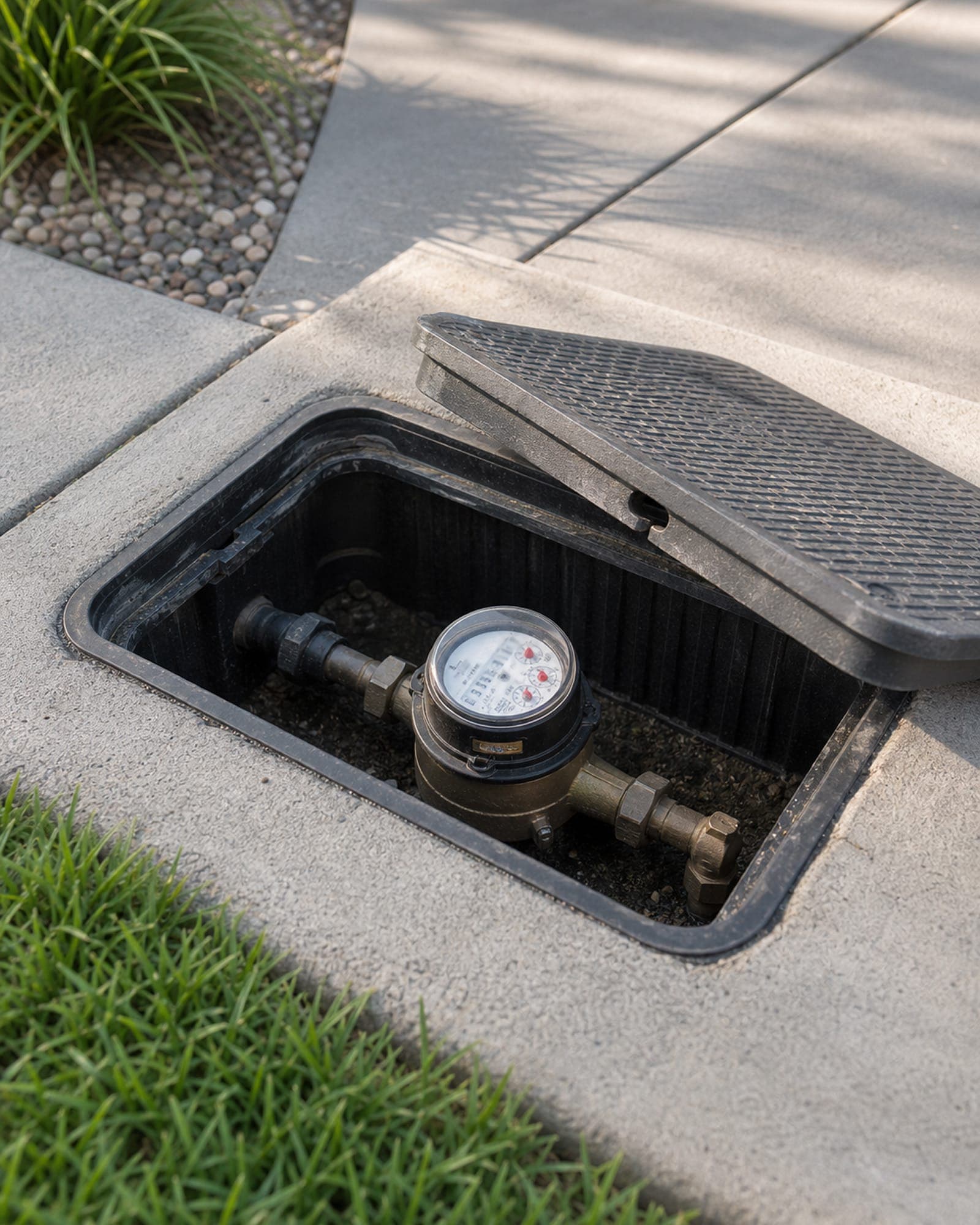
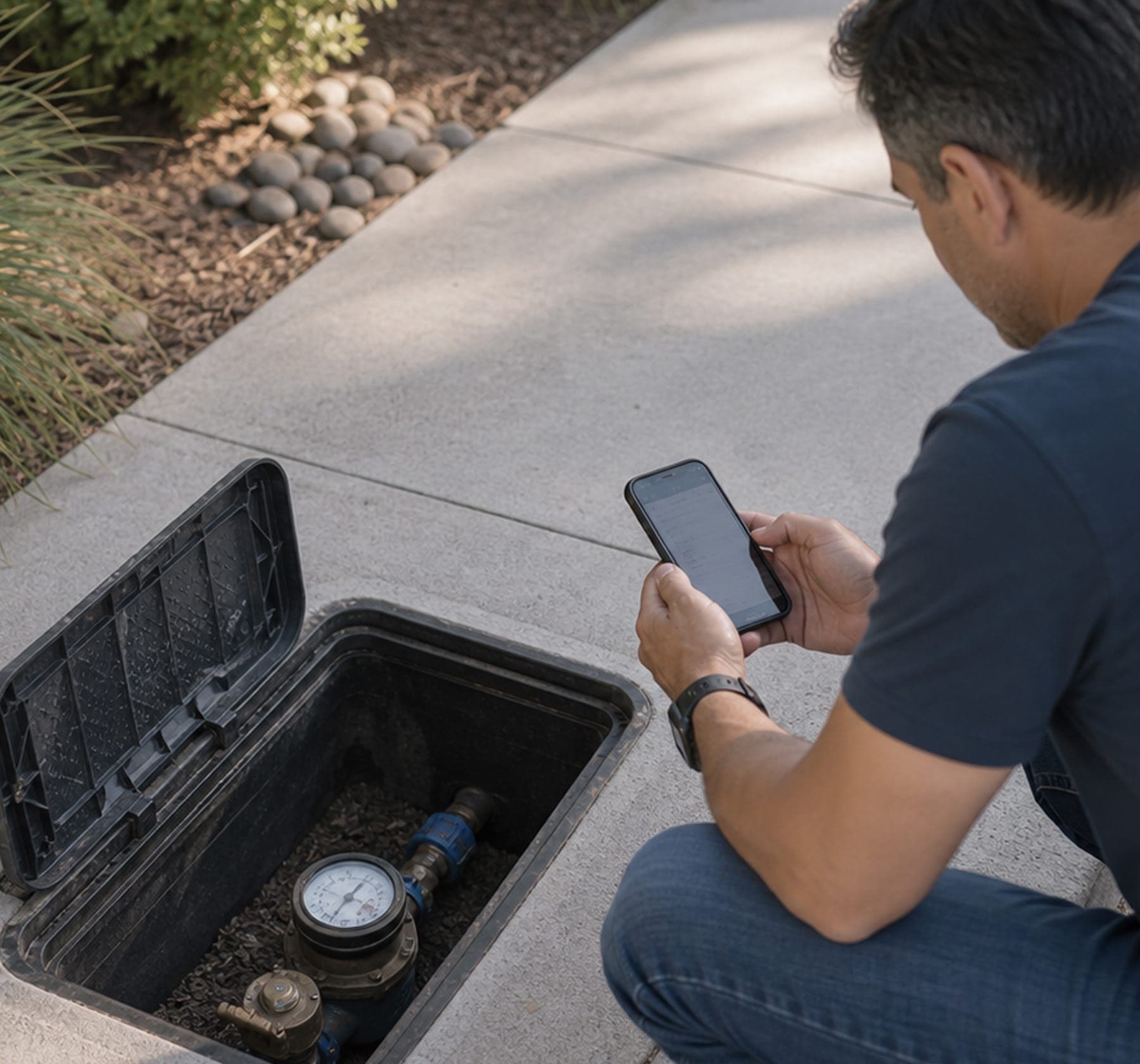
- AFind the meter. It's almost always in an in-ground box near the street or driveway, sometimes in a utility room or side-yard pit. Lift the lid and find the face: a digital display or an analog dial with numbers and a small triangular leak indicator.
- BTurn off every water use in the building. Faucets, showers, the dishwasher, the washing machine, ice makers, water softeners, the pool autofill, the irrigation controller, hose bibs. Anything that could draw water. Don't flush a toilet during the test.
- CRecord the reading. If your meter has a digital display, photograph the number. If it has a sweep hand or leak indicator, note the position. Either record is fine.
- DWait 30 minutes. Don't use water. Don't flush. Don't refill the dog bowl from the tap. Just wait.
- ERead the meter again. If the reading is exactly what it was, there is no continuously running supply leak. If the reading changed, or the leak indicator moved, water is leaving the property somewhere it shouldn't.
If the meter moved, shut the angle stops under every toilet in the building and repeat the test. If the meter stops moving with the toilet valves off, the leak is in one of the toilets, usually a flapper or fill valve. If it keeps moving, the leak is somewhere else and a detection visit is the right next step.
What the result tells you.
The meter test produces one of a handful of outcomes, and each one points to a different next step. Match your result to the row that fits.
- 01Meter moved and your bill recently spiked: a pressurized supply leak; call for detection
- 02Meter moved and closing toilet valves stopped it: toilet leak; a plumber can repair, or we can confirm scope first
- 03Meter still but bill spiked: the leak is not a continuously running supply leak; check irrigation or pool
- 04Meter still and visible damage somewhere on the property: likely envelope intrusion, not plumbing
- 05Meter moved and a new fixture was recently installed: check the new fixture before anything else
- 06Meter creeps slowly with everything off: a small but real pressurized leak; detection recommended
- 07Meter races even with everything off: an active leak losing real volume; same-day attention warranted
- 08No leak indicator on your meter: use the digital reading or photograph the dial at start and end
If your result doesn't match any of these patterns, or if the meter movement is intermittent (moves for a while, stops, moves again), that's a real diagnostic clue and worth describing to the technician at intake.
What a professional visit builds on the meter test.
The meter test confirms whether a leak is present. A detection visit confirms where. We start with your test result if you have one. That tells us what category of leak we're looking for and roughly how big it is, before any equipment comes out of the truck.
From there the diagnostic narrows. Pressure isolation separates the hot side from the cold. Fixture isolation rules out individual fixtures. Acoustic listening, thermal imaging, line tracing, and (for sewer-side or pool-side problems) camera, dye, and hydrostatic methods locate and mark the source from the surface.
The deliverable is a marked location and a written report. The repair team can open one small hole instead of three exploratory ones, and the source you've been chasing through bills and stains finally has a name and a location.
- What you bring
- Your meter test result · the readings at start and end · timing pattern · any visible symptoms
- What we add
- Acoustic, thermal, pressure isolation, camera, dye, hydrostatic: the right tool for the system
When to call after running the test.
Call us if any of the following describe what you saw, or if the test was inconclusive and you want a professional to confirm before a repair quote.
- 01The meter moved and you've ruled out toilets
- 02The meter was still but the bill is high, and irrigation or pool isn't the obvious culprit
- 03Closing toilet valves stopped the movement (we can confirm and recommend repair scope)
- 04The pattern doesn't match anything in § 03
- 05The meter movement was intermittent
- 06You want a documented result for an insurance claim or water-district notice
- 07You ran the test but can't read the meter clearly
- 08Your water district has flagged your usage and you want the source confirmed
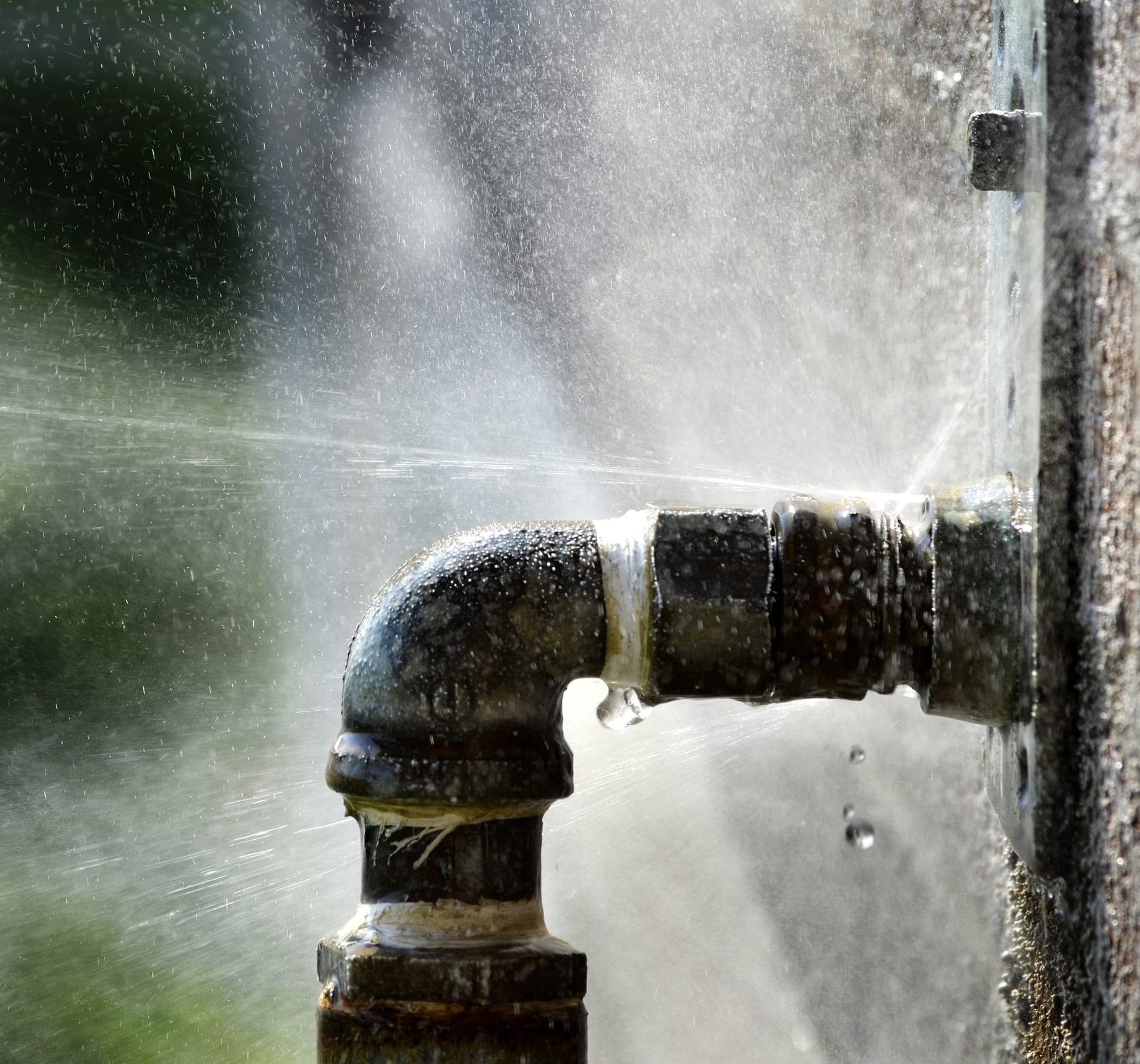
If the meter moved with everything off, the next step is a locate, not another test.
- Direct
- (916) 331-6443
Mon–Fri · 8a–5p · CA Lic. #393393 · Bonded & insured
Questions about the meter test.
Short, plain answers to what comes up when homeowners run their first meter test.
How long do I have to wait between readings?
30 minutes is the standard interval: long enough for any continuous leak to register, short enough that nobody forgets and uses the bathroom. If you can wait an hour and resist using water the whole time, an hour is even more informative for very slow leaks.
What if I can't find my meter?
Most residential meters are in a concrete or plastic box flush with the ground, near the property line at the front of the lot. The lid often has 'WATER' stamped on it. In some neighborhoods the meter is in a mechanical room, utility room, or pit on the side of the house. Your water district can tell you exactly where yours is if you can't locate it.
What if my meter doesn't have a leak indicator?
Newer digital meters often don't have a separate leak indicator. The digital reading itself is precise enough. Photograph the reading at the start, wait 30 minutes, photograph it again. Any change is the result. Older analog meters usually have a small triangle or pinwheel near the dial that moves with even tiny flows; that's the leak indicator.
What if irrigation comes on during the test?
Then the test is invalid for that period. Irrigation will move the meter regardless of any leak. Either disable the controller for the full 30 minutes, or wait until a time of day when no zone is scheduled to run and try again.
Does it matter what time of day I run the test?
Not really. Early morning before anyone is awake or late evening after everyone's done using water are easiest because there's less risk of someone forgetting and turning a tap on. Pick a time you can guarantee 30 quiet minutes.
The test was inconclusive. What now?
Intermittent meter movement, very small movement on a meter without a leak indicator, or movement that you can't quite tell is real are all signals worth pursuing. Call and describe what you saw. The diagnostic visit handles the inconclusive cases the test can't resolve.
Can I do this if the meter is in a locked box?
Some districts use locked or sealed meter boxes for security or freeze protection. If yours is locked, your district can usually unlock it for an inspection, or in some cases install a customer-side test point or sub-meter that you can read yourself. Call your district first.
Will the test catch a slab leak?
Yes, if the slab leak is on the pressurized supply side and is continuously flowing, which most slab leaks are. The test won't tell you the leak is in the slab specifically; it will only tell you that pressurized water is leaving the property somewhere. Slab-specific diagnosis is what the detection visit adds after the test confirms a leak exists.
A meter test is free. Detection is fast. Repair is the expensive part.
Every leak-detection visit goes faster when the meter test has been run first. The diagnostic narrows from 'whole property' to 'pressurized supply' (or not) before any equipment comes off the truck, sometimes saving an hour of survey time. The test costs nothing, takes 30 minutes, and the result is yours to keep. Run it before you schedule.
Tell us what the meter told you.
- Call
- (916) 331-6443
Mon–Fri · 8a–5p · CA Lic. #393393 · Bonded & insured