

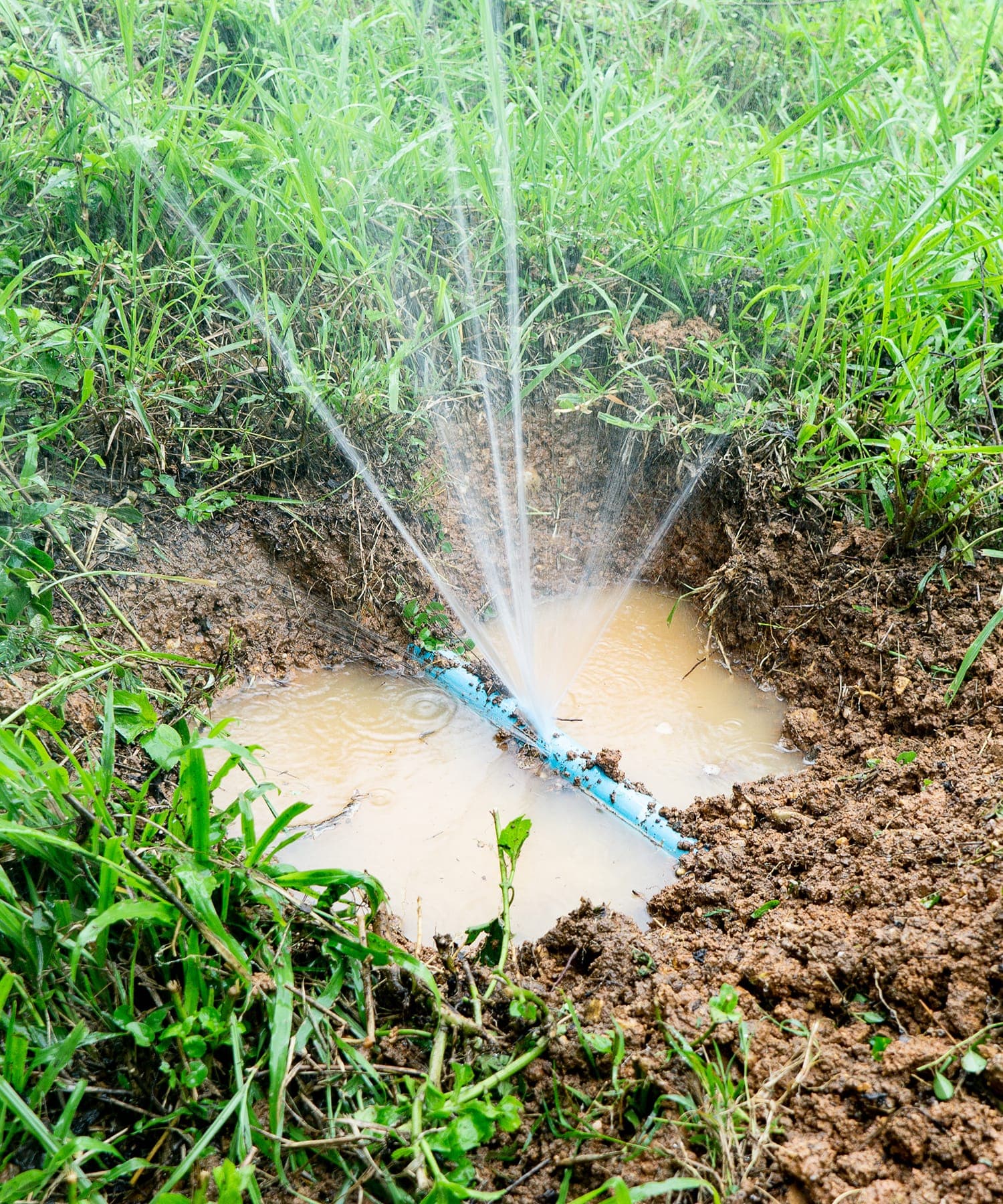
When the bill climbs with the temperature, check the irrigation first.
Most irrigation leaks don't show on a basic meter test, because they only flow when the system runs. We isolate each zone, trace the laterals, and locate the failure before the next watering cycle repeats the loss.
- Coverage
- Sacramento, Placer, El Dorado, Yolo, Sutter, Yuba, Butte, Nevada, Sierra
Irrigation leaks only flow when the system runs.
Sacramento's irrigation season runs roughly May through September, and the bill follows it. A leaking lateral, a stuck valve, or a broken riser can waste hundreds of gallons every cycle without anything visible at the surface. The water soaks into soil under the lawn instead of pooling on a sidewalk. By the time the bill makes the loss obvious, the leak has been adding up for weeks.
The diagnostic has to match. A standard no-use meter test misses most irrigation leaks because the system is off when the test runs. We turn each zone on individually, watch the meter while it runs, and isolate the failure to a specific zone before narrowing down where on that zone the leak is.
What to walk before you schedule.
Irrigation leaks show up in the landscape. Five quick observations after a recent cycle often point us straight at the zone, and sometimes the exact head, that needs work.
- ACompare this month's bill to the same month last year. Irrigation is the most seasonally variable water use, and a year-over-year jump in the same month is the calling card.
- BWalk every zone the day after a run. Note soggy patches, sinkholes, fizzing sounds from the ground, or unusually green growth (soaked soil where the rest is dry).
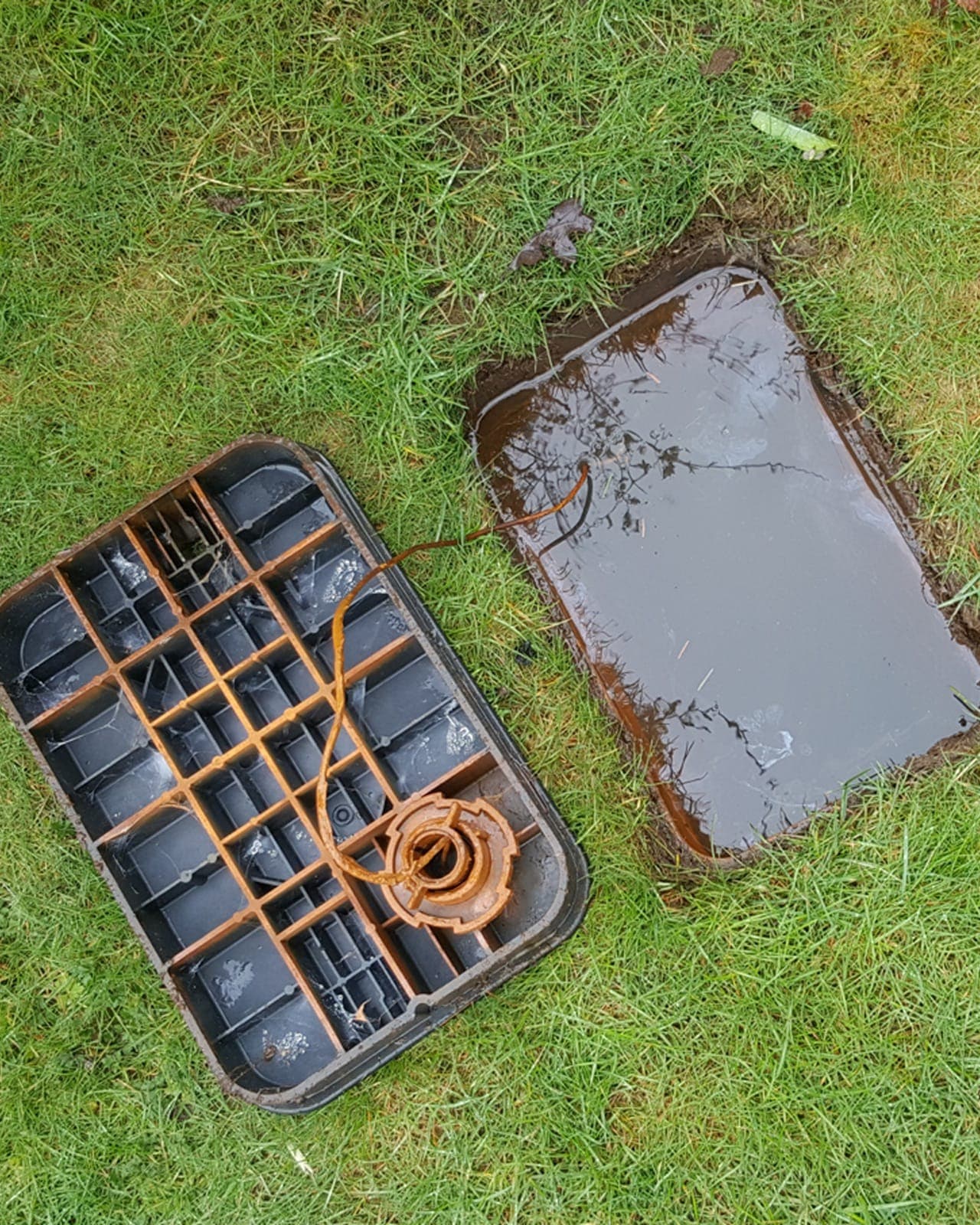
- COpen each valve box and check for standing water, mineral residue, or a valve that drips between cycles. Wet boxes are leak boxes.
- DRun each zone manually for five minutes and watch the meter while it runs. A zone that draws far more water than the others is the prime suspect.
- EInspect each visible sprinkler head and drip emitter. A broken nozzle, sheared riser, snapped fitting, or stuck check valve is sometimes the whole answer.
If you've already isolated the leak to a single zone before we arrive, the visit is shorter and the location work is faster. Even rough information narrows the search.
Where irrigation systems fail.
Most irrigation losses come from a small set of failure points. A camera doesn't help here (irrigation laterals are too small and too shallow), but tracer wire, acoustic listening, and zone isolation locate the failure cleanly. Cross-reference high water bills if the diagnostic isn't yet narrowed to irrigation.
- 01Stuck or partially closed solenoid valves leaking between cycles
- 02Cracked PVC laterals from foot traffic, lawnmowers, or soil movement
- 03Broken sprinkler heads: sheared risers, snapped nozzles, failed seals
- 04Clogged or cracked drip emitters, especially on long-running zones
- 05Corroded copper or galvanized mainline between the meter and the valves
- 06Backflow preventer leaking past a worn internal seal
- 07Loose or cracked fittings at valve manifolds
- 08Underground splices that pulled apart as soil shifted
Drip systems fail differently than spray systems and need a different inspection pass: emitter-by-emitter rather than zone-by-zone. We handle both, but it helps to know which is where.
Zone first. Then the lateral. Then the leak.
The diagnostic starts at the controller. We run each zone for a measured interval and watch the meter while it runs. A zone drawing far more than the others is the entry point. Valve box inspection rules out the obvious next: a stuck solenoid, a chattering relay, a fitting that's been weeping all season.
Once we're inside the right zone, tracer wire installed alongside PVC laterals lets us follow the run with a line locator. Pressure testing the mainline confirms supply integrity. Acoustic and ultrasonic listening picks up pressurized water escaping at the failure point: the small, continuous hiss a buried leak makes against soil and root mass.
The leak gets marked at the surface, photographed, and noted in the written report with the zone, the lateral, and the suggested repair scope. Your landscape contractor or irrigation specialist digs to a known point rather than chasing the run.
- Tools on hand
- Line locators, tracer wire, pressure gauges, acoustic and ultrasonic listening, valve testers
- Visit pricing
- Priced by test type, not by the clock
When to call for irrigation leak detection.
If any of these are on the table during irrigation season, the next step is detection, before you pay another month of the same bill.
- 01Your bill rose with the start of irrigation season
- 02One zone uses noticeably more water than the others
- 03A patch is soggy, sinking, or unusually green between watering cycles
- 04A sprinkler head is sputtering, broken, or shooting unevenly
- 05A valve box has standing water or mineral residue inside it
- 06Your water district sent a high-usage notice during summer
- 07A landscape, hardscape, or grading project recently disturbed buried lines
- 08You hear a fizzing or hissing sound from the ground after a cycle
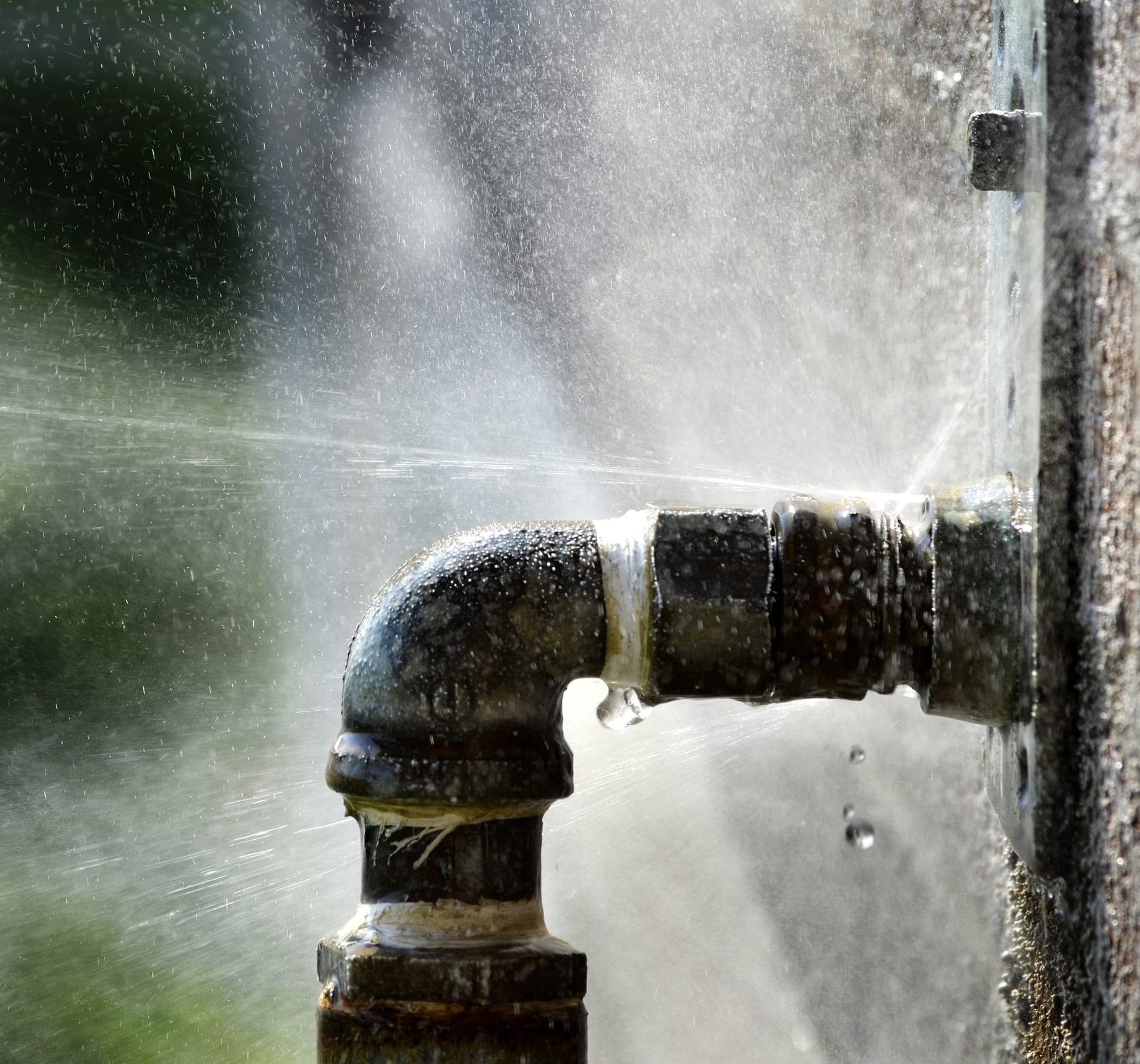
If a zone is wasting water, locate the break before the next watering day.
- Direct
- (916) 331-6443
Mon–Fri · 8a–5p · CA Lic. #393393 · Bonded & insured
Questions we hear most.
Short, plain answers to the questions homeowners, landscape contractors, and property managers ask before scheduling an irrigation leak inspection.
Why didn't my meter test catch the irrigation leak?
A standard meter test is run with the whole property's water off, and that includes the irrigation controller. If the leak only flows during the zone's cycle, the test reads zero loss. Irrigation leaks have to be diagnosed with the system running, one zone at a time, while the meter is watched.
How do you isolate a leak to one zone?
We run each zone individually for a measured interval and watch the meter. A zone that draws far more than the others, under the same conditions and with the same head count, is leaking somewhere downstream of its valve. From there, the inspection narrows to that zone's mainline, laterals, and heads.
Can you find buried lateral leaks without digging?
Most of them, yes. PVC laterals are usually installed alongside a tracer wire that lets a line locator follow the run from above ground. Acoustic and ultrasonic listening picks up the leak's signature through the soil. We mark the location at the surface, document the finding, and discuss the repair path before anything is opened.
What about drip systems? Is the diagnostic the same?
Different cadence. Drip systems run at lower pressure and have more failure points per linear foot. Every emitter is a potential leak. The diagnostic is still zone-isolation first, but the in-zone inspection is slower and often produces a list of emitters to replace rather than a single mark on a lateral.
Will the visit damage the lawn or landscaping?
No. Detection is entirely non-invasive: line locating, listening, and meter observation. Anything that gets opened during repair is your contractor's scope, and our marked location lets them open one hole instead of trenching the run.
Do you fix the leak too, or just locate it?
We locate and document the leak first, then walk through the repair path. Some irrigation repairs are best handled by a landscape or irrigation contractor, especially when the work is tied to plantings, controllers, or system redesign. If the repair is in our scope, we can discuss that option before anything is opened.
How long does an irrigation inspection take?
It depends on the number of zones, access to valve boxes, and whether the leak reproduces while the system is running. The test is priced by type, not by the clock, and every visit ends with the same written report.
Should I schedule this during irrigation season?
Yes. The system has to be pressurized and running to reproduce the leak, so a visit in July diagnoses faster than a visit in January, when the system is shut down. If you need to confirm a leak before re-opening the system in spring, we can run a static pressure test on the mainline, but zone-level leaks need a cycle to surface.
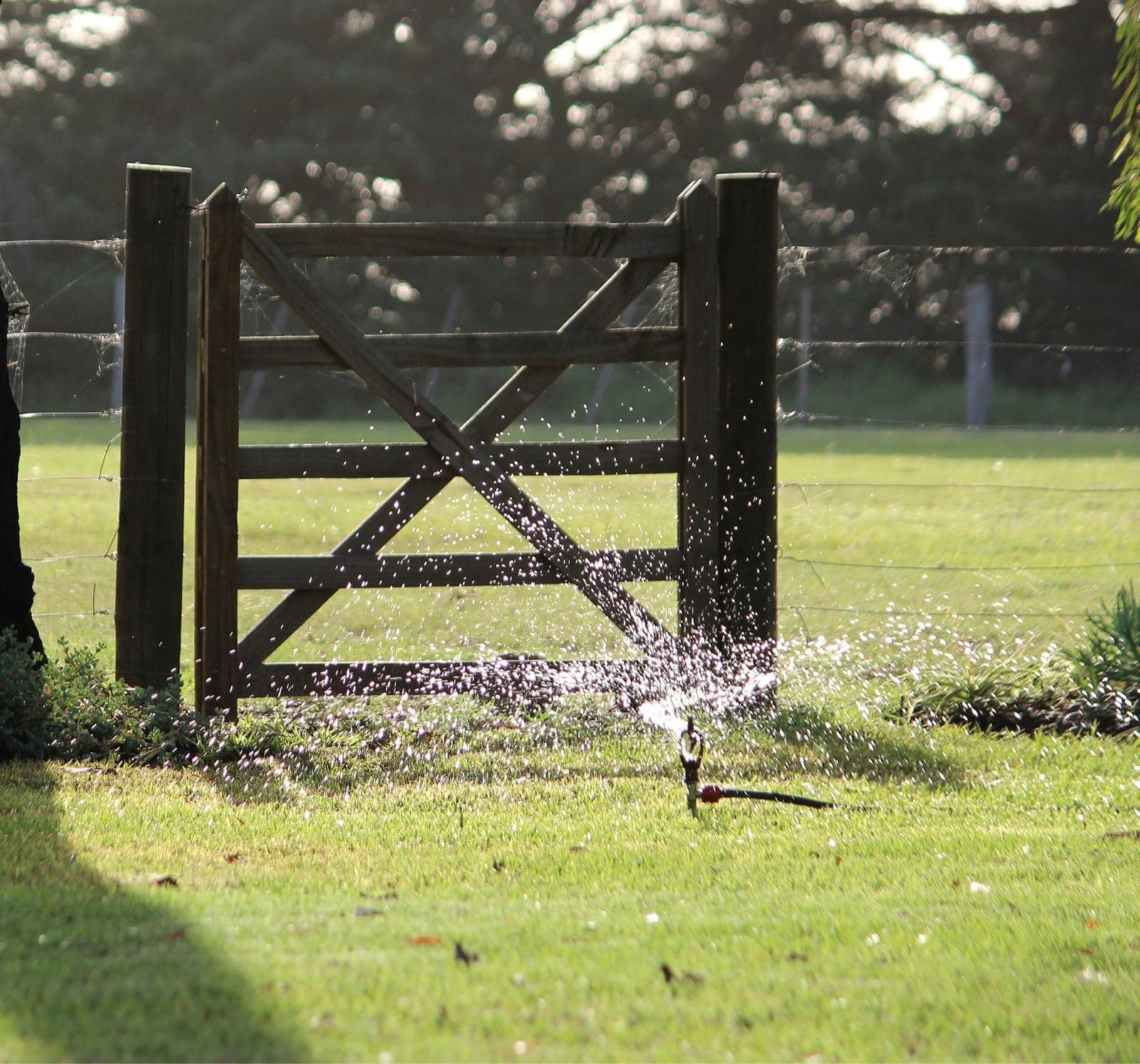
The bill arrives weeks after the water leaves.
A small leak running three times a week wastes more water in a Sacramento summer than a household uses indoors all year. By the time the bill makes the loss obvious, the season is half over. Finding the leak before the next cycle keeps the loss bounded, and lets the landscape get the water it was supposed to receive in the first place.
Stop paying for water the lawn never got.
- Call
- (916) 331-6443
Mon–Fri · 8a–5p · CA Lic. #393393 · Bonded & insured
If the work extends past the leak itself into new valves, heads, or landscape repair, these are the irrigation and landscape companies we send our own customers to.
See our trusted referrals